


The healing journey is never short, sweet, or predictable. We want healing to arrive cleanly and with ease—to move in a straight line from pain to resolution—but the body doesn’t work that way. It remembers. It protects. And above all, it stores.
For years, movement helped me process life. Training became my outlet, my release valve, the place where I metabolized stress through sweat, effort, and motion. Until one day, it wasn’t enough. I could feel the weight of everything I had pushed through accumulating faster than I could move it out. My workouts no longer created release; they exposed what had been waiting underneath all along. That was when I began to understand that true vitality is built from the inside out.
Pushing Past the Pain
The joint wouldn’t move.
No matter how many adjustments, stretches, or manual releases my physical therapist and I tried, I kept slipping back into the same compensation pattern. One muscle gripped while another overworked to protect it. My hip refused to fully release. It was as if my nervous system had memorized survival so deeply that it no longer knew another way to respond.
I remember lying on the treatment table during an acupuncture and chiropractic session, frustrated by how intelligent the body can be when it comes to holding on. The room was quiet except for the rhythm of breath and the low groan of manual bodywork trying to create relief but never quite reaching the place we were trying to open.
That day, we introduced technology into the session: the Bexxly frequency machine. At first, I didn’t think much of it. The device rested lightly on my chest while different frequencies moved through me. Some made me feel restless. Others felt neutral, distant, almost forgettable. But then we found one that changed something.
“Healing is not always about force. Sometimes it’s about resonance.”
My breathing shifted first. Without effort, my ribs softened. The guarding in my hips eased. My movement changed with that frequency—as if some deeper part of me recognized the vibration before my mind did. For the first time, the joint stopped fighting to protect itself. The compensation pattern released naturally, and it hadn’t been forced. I just no longer felt the need to brace against it.
And then it happened. A wave of emotion surfaced so suddenly it caught me off guard. Not dramatic. Not overwhelming. Just something old and buried finally moving through me the same way the tension had moved out. It felt less like healing and more like unlocking.
The Key to Unlocking Movement
Until then, I thought physical recovery was mostly mechanical—mobility, muscle activation, alignment. But lying on that table, feeling my system respond differently to different frequencies, I realized we’re listening to far more than pressure and movement. We respond to rhythm. To regulation. To safety. To signals we can’t always see but somehow still feel.
Sometimes a locked area is not simply tight tissue. Sometimes it’s stored protection—a place where the nervous system learned to grip long after the original moment had passed.
What fascinated me most was this: the release only happened when the
frequency matched what I was ready to receive. Not every frequency created movement, and not every signal created trust. But when the right one came, everything changed.
Technology is changing the way we think about strength and recovery—not because machines replace intuition, but because certain tools help us hear ourselves more clearly. Devices like the Bexxly frequency machine and Nuropod technology are not about “fixing” your emotions. They are tools that support regulation, flow, and awareness—another way to strengthen our energy, our frequency, and our connection to ourselves.
And that distinction matters.
I think this is where the future of wellness is headed—not toward pushing harder but toward listening more intelligently. This means understanding that we are electrical as much as physical, and that healing is not always about force. Sometimes it’s about resonance. When we finally feel safe enough to let go, we don’t just move differently—we live differently.
The Locked Door
Sometimes tension is not resistance. Sometimes it’s communication.
If your body had a voice, what would different areas of your body say? Stop, take a breath, and listen. What part of your body has been trying to get your attention lately?
Your hips
Would they ask for release?
Your shoulders
Would they ask you to put something down?
Your chest
Would it ask for you to take a deeper breath?
The Exhale Test
Before you dive into your next workout, try this simple exercise to prepare your body and connect you to your emotions.
1. Take one deep inhale.
2. Now exhale slowly.
3. Pay attention to how your body reacts:
› Did your shoulders drop?
› Did your jaw soften?
› Did your stomach unclench?
› Or did your body stay braced?
4. Reflect on how you feel.
What changes in your body when you stop holding your breath through life? Sometimes the body tells the truth through exhalation before the mind is ready to admit it.
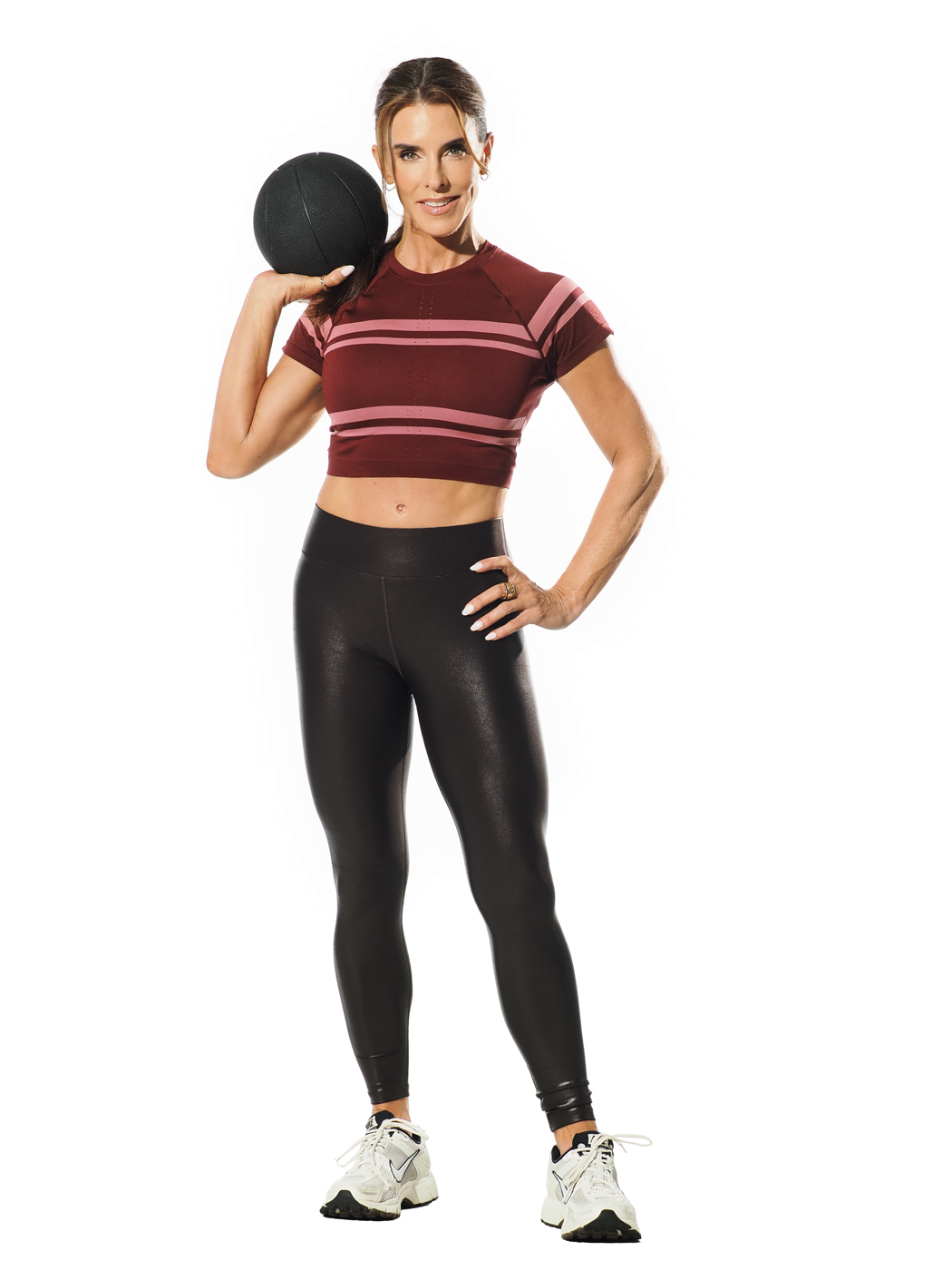
Written by Raquel Renda, Fitness & Wellness Expert, Mind and Muscle Advocate Dedicated to Helping Women Unleash Their Strength and Embrace Their Potential
Raquel photo by Paul Buceta
Hair & Makeup by Monica Kalra
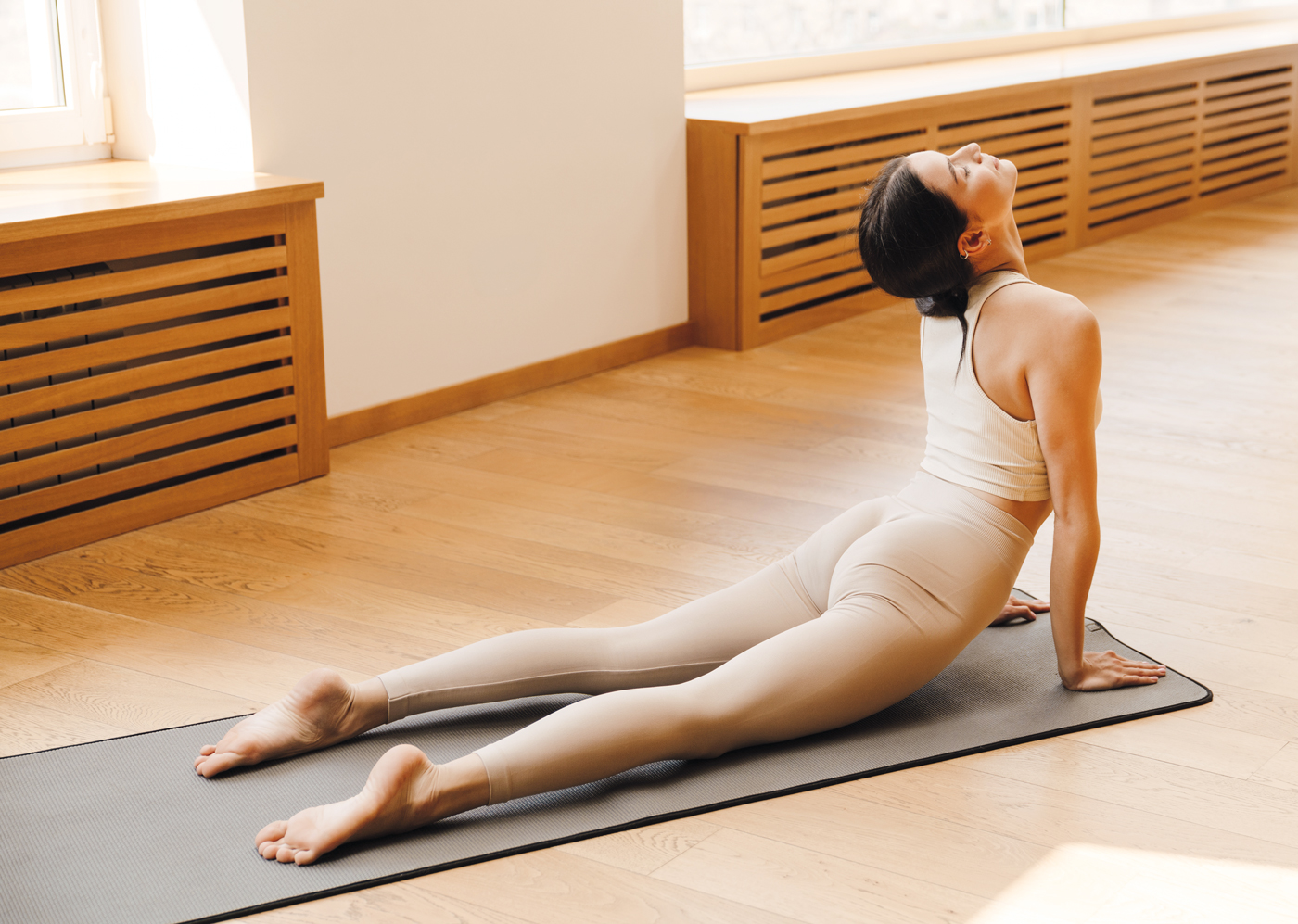
Yoga photo by Drobot Dean - stock.adobe.com
