


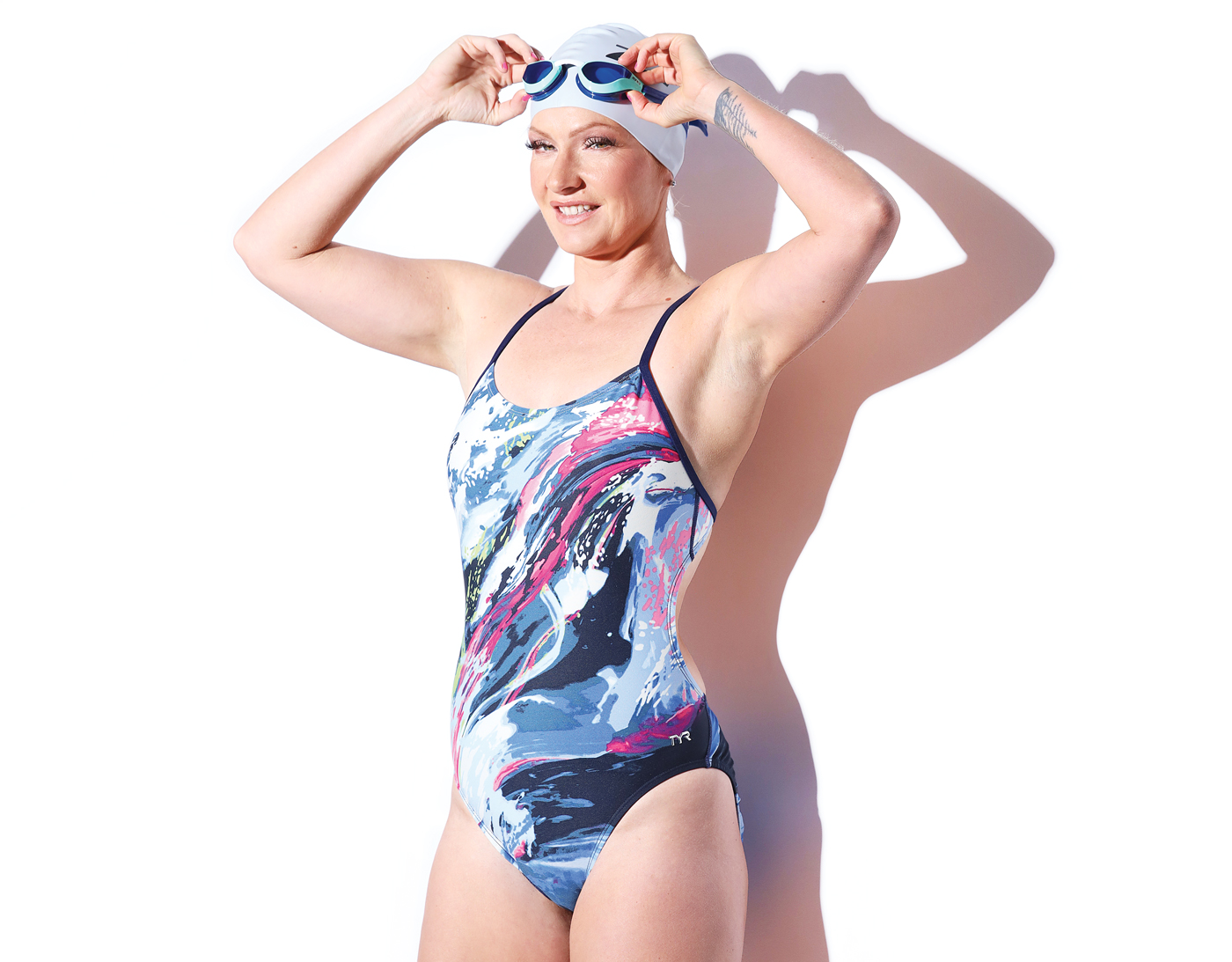
When most people think about pelvic floor training, they picture Kegels, Pilates, or maybe a few exercises with a resistance band.
But what if one of the most effective ways to support your pelvic health didn’t require mats, weights, or even gravity?
Surprise: it’s swimming—who would’ve thought? It turns out that it’s a full-body, low-impact endurance activity that offers surprising and powerful benefits for the pelvic floor.
Swimming and Your Pelvic Floor
The pelvic floor is made up of a group of muscles, fascia, and connective tissues that support your bladder, bowels, and uterus. These muscles also play a critical role in continence, sexual function, posture, and core stability.
Swimming is unique in that it engages deep stabilizing muscles, including the pelvic floor, without putting strain on joints or downward pressure on the pelvic organs. In fact, the buoyancy of water unloads the pelvic floor, allowing it to move freely and rhythmically without the added stress that gravity imposes during land-based exercises.
Different Strokes
These strokes are particularly beneficial for those managing stress, urinary incontinence, or pelvic floor weakness. Let’s take a closer look.
Freestyle (Front Crawl)
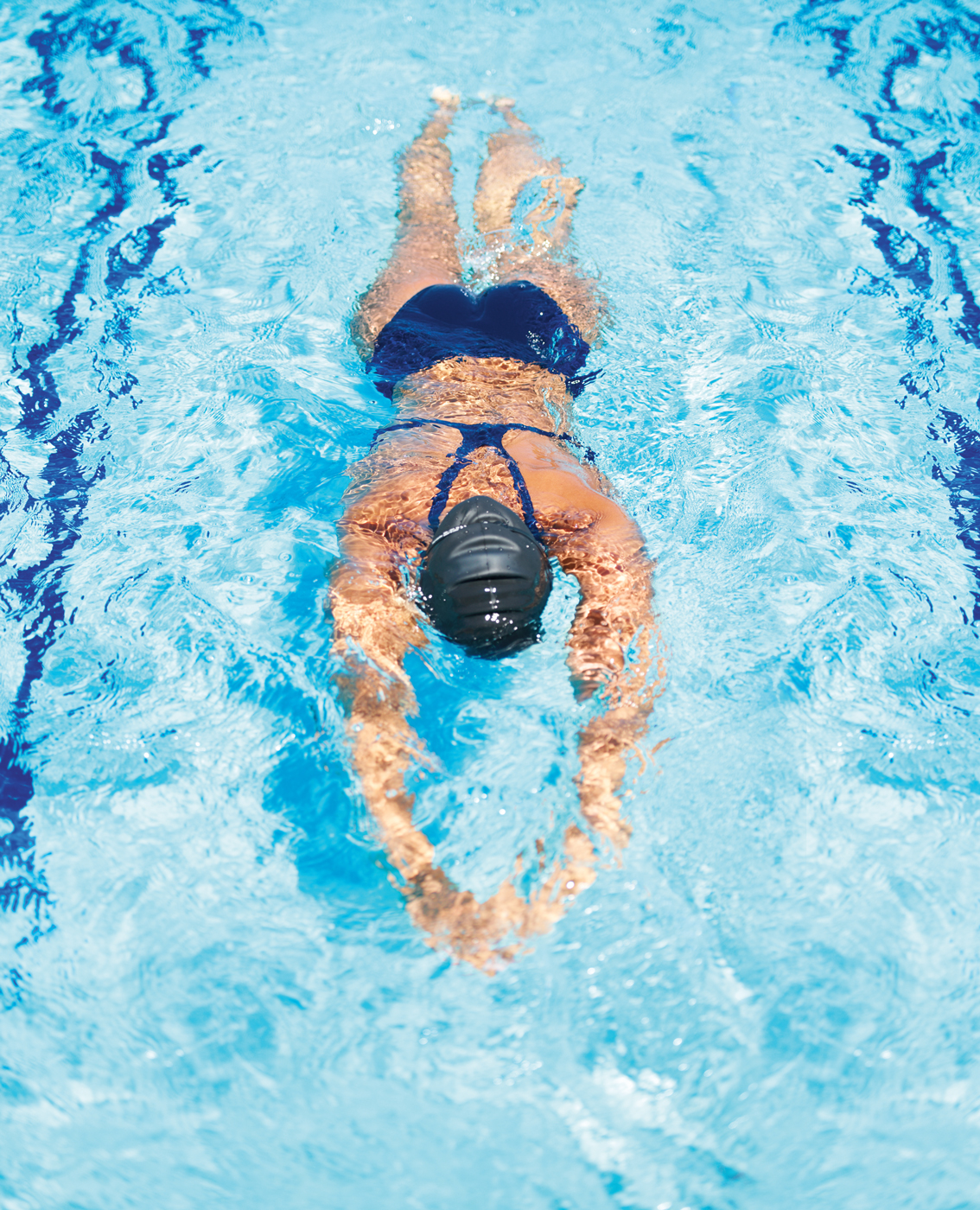
Freestyle swimming engages the entire core, including the transverse abdominis (the band of muscles around your waist) and the pelvic floor, in a rhythmic, repetitive pattern. Each kick and reach activates the pelvic muscles reflexively. The gentle rotation of the torso also encourages balanced engagement of the obliques and deep core muscles, which support continence function.
This stroke is especially useful for improving your breath and your core engagement, a key element in managing incontinence during daily movements or other exercises.
Backstroke
The backstroke is one of the most pelvic floor-friendly strokes. Why? You’re on your back, which means no intra-abdominal pressure is placed on the pelvic organs. This is particularly helpful for those with prolapse or a history of pelvic floor trauma (such as childbirth).
The flutter kick in backstroke also strengthens the glutes and lower abs, both of which contribute to pelvic stability and reduce pelvic floor overload. It’s a gentle way to build endurance and confidence without triggering leakage or discomfort.
Reasons to Dive In
Need an additional push to get into the water? (Figuratively, not literally, of course.) Here’s four more reasons you should make a splash this summer, and beyond.
It’s fantastic for your joints. Have achy knees or shoulders? Water takes the pressure off your legs, upper body—pretty much everything.
It’ll give your mood a boost. Not only will your body release endorphins that can improve your mood, if you swim in a lake, river, or the ocean, you’ll benefit from being in nature, which can make you feel happier.
It has benefits for mothers-to-be. The American College of Obstetricians and Gynecologists says it’s generally safe for pregnant women to swim as a form of exercise, though you should always check with your doctor first. Plus, an October 2024 review published in BMC Pregnancy and Childbirth suggests that swimming during pregnancy may help in maternal weight control and result in a longer newborn body length.
Your brain will benefit. Research has found that swimming directs more blood to the brain than walking, running, or other upright activities, which in turn can improve memory, focus, and mood.
Butterfly
Although more intense, the butterfly stroke provides excellent benefits such as pelvic floor strength and reflexive firing. The undulating motion of the butterfly engages the posterior chain and requires strong intra-abdominal coordination. The pelvic tilt in the dolphin kick used in butterfly also adds a powerful movement that strengthens pelvic floor muscles.
This stroke can help improve the timing and firing of pelvic muscles, particularly in those who are physically advanced or already engaging in a regular endurance or core-training routine. However, it’s best introduced after pelvic strength and control have been reestablished with the help of other gentler strokes.
Breaststroke
On the other end of the spectrum, the breaststroke is particularly beneficial for those with a hypertonic (very tight) pelvic floor. This is often seen in women who experience pelvic pain, painful intercourse, chronic constipation, or even paradoxical incontinence, in which bladder muscles are too tight to function properly. It’s considered by some to be the best swim stroke for a tight or overactive pelvic floor.
The breaststroke encourages a gentle opening and closing of the hips, and the wide, sweeping motion of the legs can relax and lengthen the inner thigh and pelvic muscles, which are often connected to pelvic floor overactivity. The slow cadence of the breaststroke also promotes parasympathetic nervous system activation, which is key to helping the body and pelvic floor relax.
Additionally, the breath pattern in breaststroke (inhale with the lift, exhale with the glide) aligns beautifully with diaphragmatic breathing, which plays a direct role in downtraining a tight pelvic floor.
The Breathing Bonus
All swim strokes require regulated, rhythmic breathing, a natural complement to pelvic floor health. The diaphragm and pelvic floor move together as part of a pressure system. Each inhale and exhale during swimming facilitates this coordination, in turn helping the pelvic floor move through its full range of motion: contracting, relaxing, and lengthening as needed. Over time, this trains the nervous system to restore balance, whether the muscles are too tight, too weak, or firing at the wrong time.
Swimming isn’t just cardio. It’s a neuromuscular reset, a pelvic floor-friendly endurance sport, and a powerful addition to any rehab or prevention program for women experiencing pelvic floor dysfunction. Whether you’re dealing with leaks, pressure, or pain, or simply looking for a lifelong movement option that supports your core from the inside out, swimming offers something uniquely therapeutic. Add it to your summertime routine, and reap more benefits than just a fantastic way to cool off. Your pelvic floor will thank you for getting in the water!
Written by Patricia Siegel, Pelvic Health Expert
Photography by Paul Buceta
Hair & Makeup by Monica Kalra


